An automated valuation model, or AVM, is a computer estimate of a property's value, built from sales data and basic property details. In Vietnam, định giá nhanh nhà đất bằng AI offers the same kind of quick estimate. It is useful for screening, but it is not a property valuation. A formal valuation is a report signed by a licensed valuer after an on-site inspection and market analysis, and it is the document that banks, courts and tax processes usually need. This guide explains the difference and when each one makes sense for investors from Australia, New Zealand and Singapore.
How an AVM works
An AVM combines recent sales in the area, the basic characteristics of the property (floor area, location, type of property, year built) and some market variables, then produces an estimated value. Many platforms also show a value range or a confidence measure. The advantages are speed, low cost and the ability to screen many properties at once.
The limitation is that the model only sees what is in its data. The actual condition of the house, access, orientation, recent renovations or a complicated title may not be reflected. In areas with few transactions, the result is less certain. Industry commentary in Australia makes the same point: an AVM is an estimate and should not be confused with a valuation from a registered valuer.
What a property valuation is
A property valuation determines the value of an asset under defined standards and a documented process, carried out by a licensed valuer in Vietnam. The result is recorded in a valuation report. If you want to understand how valuation differs from broader estimates, our article on valuation and appraisal terminology is a useful start (in Vietnamese).
AVM compared with a formal valuation
| Criteria | AI quick estimate (AVM) | Formal property valuation |
|---|---|---|
| Who produces it | An algorithm, with no valuer's signature | A licensed valuer, who signs the report |
| Site inspection | No | Yes, on-site inspection |
| Speed | Very fast | Depends on documents and inspection schedule |
| Suitable use | Screening and early reference | Bank lending, tax, court matters, asset division, major sales |
| Accountability | An estimate only | The signing valuer is accountable for the opinion |
When to use an AVM, and when you need a valuation
- Use an AVM to screen many properties and compare areas roughly. You can start with DAVA's quick property price lookup.
- Use an AVM to get an early sense of value before you decide to inspect a property.
- Commission a formal valuation for bank lending, tax filings, court matters, asset division, disputes or a large purchase or sale.
- Commission a formal valuation for specialist assets, such as agricultural land, factories, older renovated houses, or areas with few comparable sales.
Can an AVM replace a signed valuation report?
No. An AVM does not replace a report signed by a licensed valuer. An AVM output is an estimate, not an opinion with a named professional accountable for it. For a major decision or any formal use, you should have a valuation report. A sensible approach is to use an AVM to shortlist properties, inspect the ones that interest you, and then commission a valuation before you sign. You can also read our guide to the contents and validity of a valuation report (in Vietnamese).
General legal framework
In principle, a valuation used for a formal purpose in Vietnam must be prepared by a licensed valuer under the valuation rules in force. The report should state the purpose, scope, method and any limiting conditions. The detailed requirements change over time, so confirm them against the current legislation at the date you need the report.
How DAVA runs a valuation
- We confirm the purpose of the valuation and the type of asset.
- We collect the legal documents and information on the current condition.
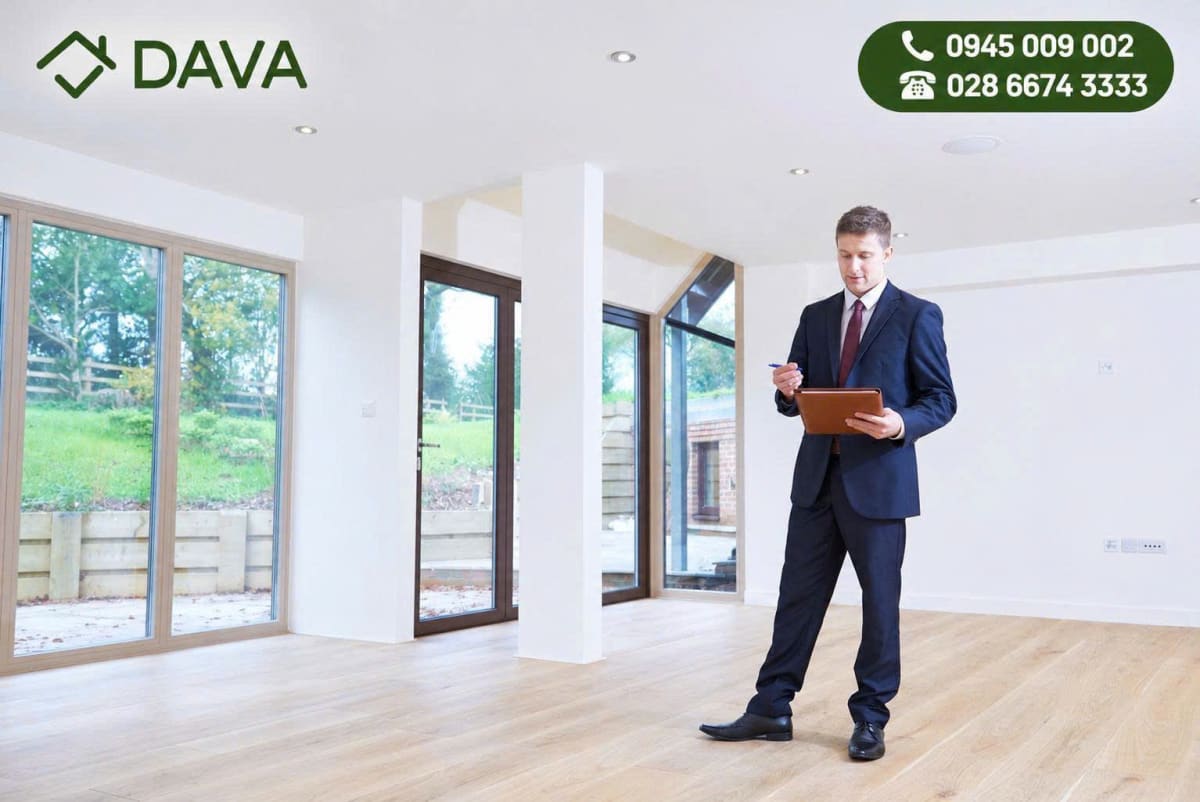
- A licensed valuer inspects the property on site, takes photographs and records its features.
- We analyse the market, select comparable sales and apply the appropriate method.
- We issue a valuation report signed by the licensed valuer.
- We review the result with you. For the full process, see our article on the six steps of a property valuation (in Vietnamese).
Timing
Timing depends on the documents, the type of property and the inspection schedule. Complete documents generally shorten the process considerably. DAVA will give a specific estimate once we have received your file.
Documents to prepare
- Land use right and home ownership documents for the property.
- Site plans or drawings, or the size details if available.
- Any mortgage, planning or dispute information you already know.
- Contact details to arrange the inspection, and the purpose for which the report will be used.
Fees
Fees depend on the property value, the documents provided and the purpose of the valuation. Contact DAVA for an accurate quote and free initial advice. The table below shows indicative fees for property valuation in VND. For comparison with Australia, New Zealand and Singapore, see the section further down.
Biểu phí chỉ mang tính tham khảo, tượng trưng. Phí thực tế tùy hồ sơ, vị trí và số lượng tài sản. Vui lòng liên hệ để được báo phí tốt nhất.
| Property value | Bank lending | Preliminary quotation | Court and disputes | Criminal and special cases |
|---|---|---|---|---|
| 500 million | 3.0 | 2.1 | 10.4 | 20.0 |
| 1 billion | 4.0 | 2.8 | 10.4 | 25.0 |
| 2 billion | 5.0 | 3.5 | 13.0 | 30.0 |
| 3 billion | 5.9 | 4.1 | 19.5 | 35.0 |
| 5 billion | 7.6 | 5.3 | 19.5 | 42.0 |
| 10 billion | 12.4 | 8.7 | 26.0 | 50.0 |
| 20 billion | 22.9 | 16.0 | 39.0 | 89.0 |
| 50 billion | 44.7 | 31.3 | 63.7 | 190.0 |
| 100 billion | 59.5 | 41.7 | 115.7 | 310.0 |
| Above 100 billion | By agreement | |||
Ask for a quote for your property. Fees depend on the property, the documents and the purpose. Contact DAVA for an accurate quote and free initial advice.
- Hotline/Zalo: 0945 009 002 · 0906 915 002
- Office phone: 028 6674 3333
- Email: voan.sgg@gmail.com
- Zalo OA: https://zalo.me/4259407728989141071
Common scenarios
Bank lending
Banks usually require a valuation to confirm the value of the security property. An AVM output does not meet that need, so check the bank's requirements before you prepare the loan file.
Online price suggestions on listing platforms
The figure shown on a listing platform is a reference point. Verify it with an inspection and a valuation before negotiating.
Asset division or disputes
When the parties need a figure they can rely on, a signed valuation report is essential. An algorithmic estimate will not carry much weight in a dispute.
Vietnam vs Australia, New Zealand and Singapore
| Criteria | Vietnam | Australia | New Zealand | Singapore |
|---|---|---|---|---|
| Who signs the valuation report | Licensed valuer (thẩm định viên về giá) | Certified Practising Valuer (CPV) of the API; some states, such as Queensland and Western Australia, require registration | Registered valuer under the Valuers Act 1948 | Licensed appraiser issued by IRAS under the Appraisers Act 1906, renewed annually |
| Standards | Vietnamese valuation standards | IVS and API standards | PINZ and NZIV standards | SISV for property; IVAS for businesses |
| Typical fee (approximate) | VND 2.1–3.0 million for a VND 500 million property, roughly AUD 120–170, NZD 150–210 or SGD 105–150 (approximate, based on rates around 15 November 2026) | Varies; request a quote | From about NZ$800 plus GST (2023 figure) | Around S$500–700 |
| Title and ownership | State ownership of land; land use rights; foreign individuals cannot own land | Freehold title is common | Freehold title is common | Leasehold, often 99 years, is common; ABSD applies to foreign buyers |
Frequently asked questions
How accurate is an AVM?
Accuracy depends on the data and the type of property. For standard homes in areas with many sales, the result is usually a reasonable reference. For specialist properties or areas with few sales, the result is less certain, and it remains an estimate.
Should I make a purchase decision based only on an AVM?
No. Use an AVM as a screening step, then inspect the property and commission a valuation before you decide.
How is a signed valuation report different from an AVM result?
The report carries the signature of a licensed valuer, sets out the method, data and limiting conditions, and is based on an on-site inspection.
Will a bank accept an AVM result?
Check each bank's requirements. Security property generally needs a valuation at the bank's required standard, so ask before you prepare the loan application.
How are property valuation fees calculated?
Fees depend on the property, the documents and the purpose. Contact DAVA for an accurate quote and free initial advice.
Does DAVA operate in Ho Chi Minh City, Hanoi and Da Nang?
Yes. DAVA has offices in these three cities and inspects properties on site. We can work with you in English, and documents can be prepared bilingually.
Conclusion
An AVM is a useful tool for a fast first look at value. When you need to buy, sell, borrow against, or resolve a dispute over a property in Vietnam, a signed valuation report from a licensed valuer is the document to rely on.
How DAVA supports foreign companies and expats in Vietnam
DAVA has more than 15 years of experience valuing real estate, businesses and machinery and equipment. We have prepared valuations for courts, government agencies, banks and companies. Datngop.com, a member of DAVA, offers AI-based quick valuations for good-value, distressed and liquidation properties, and we treat those results as a screening step only.
For English-language enquiries, email voan.sgg@gmail.com, or WhatsApp +61 451 710 342 (Qualified AU Pty Ltd, for Australian clients). Our team can work with you in English; documents can be prepared bilingually.
Sources
- Automated valuation model (Wikipedia)
- Automated Valuation Model Explained (UNO Home Loans)
- Property Valuations for Home Loans (Secure Finance)
- Are Automated Valuation Models Accurate? (Melbourne Property Valuation)
- New Zealand valuation fees, 2023 (smithpartners.co.nz)
- Singapore home appraisal fees (hlas.com.sg)
- AUD exchange rate (webgia.com)
- NZD and SGD exchange rates (doanhnghiephoinhap.vn)