Asia Legal Group – Legal companion for workers and FDI enterprises.
I. INTRODUCTION
1. Context and importance
When working in Vietnam, foreign workers (experts, engineers, managers...) may face the risk of labor disputes — from contract termination, dismissal, salary complaints, insurance, allowances, to civil-legal issues. Resolving labor disputes properly not only protects personal rights but also helps avoid complications with visas, work permits, and temporary residence cards.
For foreign workers, a lack of understanding of the Vietnamese legal system or lack of professional support can lead to major losses — both in terms of finances, reputation, and the ability to continue working legally.
2. Objective of the article
Provides detailed guidance on the labor dispute resolution mechanism in Vietnam (according to the latest law).
Instructions on processes, deadlines, methods — for foreign workers.
State difficulties and practical experiences (case studies) so that the audience clearly understands the risks and how to avoid them.
Introducing legal solutions from Asia Legal Group - how we provide effective, fast and reliable support.
3. SEO scope & target keywords
Some key keywords that should be optimized:
- “Resolving labor disputes”
- “labor dispute Vietnam”
- “Vietnamese foreign labor dispute”
- “Vietnamese labor conciliation”
- “Labor Arbitration Council”
- “Time limit for filing lawsuits on Vietnamese labor disputes”
- “Asia Legal Group labor dispute”
II. LEGAL BASIS & PRINCIPLES OF DISPUTE RESOLUTION
1. Main legal basis
The Labor Code 2019 (No. 45/2019/QH14) is the basic document regulating the resolution of labor disputes. According to Article 179 of the 2019 Labor Code, "labor dispute" is defined as a disagreement in the rights, obligations, and interests between the employee and the employer during the process of establishing, implementing, or terminating the labor relationship. Dispute resolution principles (Article 180): priority is given to self-negotiation, conciliation, and arbitration; Ensuring transparency, timeliness and fairness. Resolving authority (Article 187): includes labor mediators, Labor Arbitration Council, or People's Court.
Time limit for filing a lawsuit according to regulations:
- Request a mediator: within 6 months from the date of discovery of the violation.
- Request to the Labor Arbitration Council: within 9 months.
- Court request: within 1 year.
2. Processing principles
Some basic principles in the resolution process:
- Freedom to agree: Parties should prioritize negotiation and self-resolution if possible.
- Prioritize mediation and arbitration: Vietnamese labor law prioritizes mediation, followed by arbitration, before going to court.
- Open, transparent, and on time: The process of resolving labor disputes must comply with regulations, ensuring the rights of employees and employers.
- Representative participation: Parties have the right to participate directly or authorize representatives.
- Responsibility for providing evidence: Both parties must promptly provide necessary records, documents, evidence and information.
- Do not unilaterally stop operations: While the dispute is being resolved, the parties are not allowed to unilaterally take actions that harm the other party (for example, firing, going on strike) if prohibited by law.

RESOLVING LABOR DISPUTES FOR FOREIGN WORKERS IN VIETNAM
III. FORMS OF RESOLUTION OF LABOR DISPUTES
In Vietnam, according to the 2019 Labor Code, there are three main ways to resolve labor disputes: mediation → labor arbitration (arbitration) → court.
1. Mediation – mandatory in many cases
Is a mandatory initial step for most "individual labor disputes", according to Article 188 of the 2019 Labor Code.
Except for some types of disputes that do not require conciliation, for example: disciplinary dismissal, unilateral contract termination, compensation upon contract termination, social insurance, health insurance, unemployment insurance disputes...
Conciliation time limit: The law stipulates that labor conciliators must complete the conciliation process within 5 working days from receipt of the request.
Mediation results:
- If mediation is successful → make a minutes of mediation signed by the parties and the mediator, this agreement is valid as a commitment.
- If mediation is unsuccessful → the mediator will propose a solution (if any) and move to arbitration or court.
2. Labor Arbitration (Labor Arbitration)
When conciliation fails or when the parties reach an agreement, they can request the Labor Arbitration Council to intervene.
Establishment of an arbitration council: within 7 working days of receiving the request, an arbitration tribunal is established.
Making a decision: The arbitration panel has 30 working days from its establishment to make a decision on the labor dispute, based on the Labor Law, company charter, internal regulations, and legal agreements.
If the arbitration council is not established on time or fails to issue a decision within the prescribed time limit, the parties can bring the case to Court.
If the disputing party does not implement the decision of the arbitration council, the other party can continue to sue in court.
While arbitration is underway, both parties cannot sue in court at the same time (except in cases prescribed by law).
3. Court (Court)
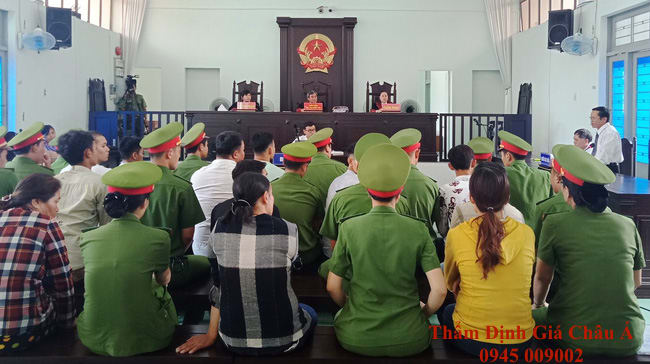
If the arbitrator fails to establish or issue a decision on time, or a party does not comply with the arbitration decision, the parties may bring the case to the People's Court.
Time limit for suing the Court: maximum 01 year from the date of discovery of the violation according to Article 190 of the 2019 Labor Code.
The Labor Court handles disputes according to civil procedures (according to the Civil Procedure Code), whichever party loses can appeal or appeal according to regulations.
IV. DETAILED PROCESS FOR FOREIGN WORKERS
Below is a detailed – step-by-step – process for a foreign worker in Vietnam to initiate and pursue labor dispute resolution.
Step 1: Determine the type of dispute
Check whether your dispute is an individual dispute (such as salary, working conditions, contract termination) or collective (if you are a representative of a labor organization).
Determine whether the dispute requires conciliation under the Labor Law (for example, disciplinary dismissal disputes usually do not require conciliation).
Step 2: Prepare documents and evidence
Collect all relevant documents: labor contract (can be a bilingual contract), payroll, allowances, emails, dismissal notices, disciplinary decisions, proof of insurance, payment receipts...
Record the time and content of conversations with the company (meetings, emails, calls), to use as evidence.
If documents need to be translated (Vietnamese into your language), a legal/expert service should be used to ensure accuracy.
Step 3: Request mediation (Mediation)
Make a request for mediation to the local labor agency or labor mediator in the province/city where you work.
In the application, clearly state: information of both parties (you - the company), content of the dispute, proposed settlement, and attached evidence.
After receipt, the mediator will invite both parties to a mediation meeting within 5 working days.
During the mediation, you can participate directly or authorize a representative (lawyer, colleague, legal organization) according to Article 182 of the Labor Code.
If conciliation is successful → make a record, agree on terms, and sign the conciliation record.
If unsuccessful → the mediator will take notes and make recommendations (if any), then you decide the next step is arbitration or court.
Step 4: Request labor arbitration (Arbitration)
If conciliation fails or the parties agree to arbitration, you submit a “Request for Labor Dispute Resolution” to the Labor Arbitration Council in the province where the company is headquartered.
The Arbitration Council will establish an arbitration panel within 7 working days.
The arbitration panel will conduct research on the file, convene the parties, and issue an arbitration decision within 30 working days from its establishment.
The arbitration decision is a "mandatory" decision for the parties (in principle), if the parties have chosen arbitration. If either party fails to do so, the other party can take it to court.
Step 5: File a lawsuit in court (if necessary)
Conditions: if the arbitration is not established, or the arbitration panel does not issue a decision on time, or a party does not implement the arbitration decision.
File a lawsuit with the People's Court of the province where the company is headquartered or where you work.
In the petition, must clearly state: information of the parties, dispute content, requests, evidence, conciliation minutes (if any), arbitration decision (if any).
The court will adjudicate according to civil procedures, and you have the right to appeal if you do not agree with the decision.
Step 6: Implement the decision/judgment
If you win in mediation or arbitration: require the company to comply with the agreement or decision (e.g., pay, compensation, reinstatement).
If it is not enforced, you can use the arbitration decision as a basis to request the Court to enforce the judgment.
If it is a court judgment: request enforcement according to the Civil Judgment Enforcement Law.
V. TIMELINE & LEGAL LIMITATIONS (STATUTE OF LIMITATIONS)
There are a number of ways to sue for labor disputes Important time constraints that foreign workers need to keep in mind when starting the procedure.
Request for Mediator: within 6 months from the date of discovery of the employer's violation.
Request to the Labor Arbitration Council: within 9 months from the date of discovery of the violation.
Initiate a lawsuit in court: within 1 year from the date of discovery of the violation.
If there is an objective event (natural disaster, illness, etc.) that leads to the inability to file a lawsuit on time, you can prove that the interruption period is excluded under the law.
VI. COMMON DIFFICULTIES AND SPECIAL NOTES FOR FOREIGNERS
1. Language and profile barriers
Foreign workers may not fully understand the legal process and Vietnamese terminology.
Preparing documents in Vietnamese (conciliation application, lawsuit...) can be difficult without a translator or lawyer.
Wrong translation, missing important documents → request rejected by mediator or arbitrator.
2. Lack of understanding of rights & responsibilities
Some foreign workers do not know their right to sue, or the time limit for filing a lawsuit.
They may neglect to save timely evidence (emails, payroll, allowances), resulting in the loss of the ability to successfully sue.
3. Cost & time cost
Mediation is often free or lower cost, but arbitration and court action require attorney fees, interpreters, and administrative costs.
The arbitration process takes approximately 30 business days to make a decision, but enforcement of the decision may take time.
Filing a lawsuit in court can take many months, depending on the court's workload.
4. Lack of pressure to implement decisions
Arbitration decisions are valid, but are not always easy to enforce if the losing side is "indolent".
If enforced through court, you need to closely follow the civil judgment enforcement process and may need the assistance of a lawyer.
5. Legal culture & experience in mediation/arbitration
The local mediator or arbitrator may give priority to the business (which has a good relationship with the labor agency).
Foreign workers should find lawyers and international law organizations to protect their fair rights.
VII. CASE STUDY & PRACTICAL EXPERIENCE (ASIA LEGAL GROUP)
To illustrate, below are some real-life examples Asia Legal Group has supported foreign workers in resolving labor disputes in Vietnam.
Case Study 1: Korean expert was unfairly fired
Situation:
A Korean expert working at an FDI company in Hanoi was fired by the company without notice, without payment of the last month's salary and without payment of re-export support fees.
The company cited "end of project" but did not provide supporting documents.
Solutions of Asia Legal Group:
- Expert guidance on the right to sue: mediation, arbitration or court.
- Collect evidence: labor contract, email, salary, timesheet.
- Initiate mediation with local labor mediator, we engage in translation & representation support.
- Unsuccessful mediation → request labor arbitration with the Arbitration Council in Hanoi.
- The arbitration panel was established within 7 days, held a meeting, and decided after ~30 days. Result: the company must pay outstanding wages, layoff compensation, and support legal re-export costs.
- We help monitor the enforcement of arbitration decisions through courts / enforcement agencies if the company hesitates.
Lesson: Foreign workers need to act quickly when violated, collect sufficient evidence, and use experienced labor lawyers to effectively protect their rights.
Case Study 2: Australian technical employee sues for salary & overtime allowances
Situation:
- Australian technical staff working at a production branch in Ho Chi Minh City discovered that the company did not pay full overtime allowances, violating the contract.
- He made notes in emails and timesheets, but the company denied the request.
Solutions of Asia Legal Group:
- Check labor contracts, determine allowance and overtime terms.
- Instruct him to prepare a request for conciliation at the Department of Labor, Invalids and Social Affairs of Ho Chi Minh City, in conjunction with a lawyer to ensure his rights.
- The mediation took place, we helped translate and negotiate. The company initially refused to pay the full amount, but after the mediator proposed, they agreed to pay the remaining allowance + overtime pay.
- Sign the conciliation minutes and request the company to execute. If the company is late, we support monitoring and using follow-up measures (if necessary).
Lesson: Foreign workers must be proactive in requesting allowances, know their rights under contract and Labor Law, and use professional assistance to negotiate.
Case Study 3: Group of foreign workers wants to sue social insurance
Situation:
- A group of engineers from Europe working at a company in Da Nang realized that the company had not paid social insurance as prescribed in the long-term labor contract.
- The company cites "exemption from social insurance" or uses internal reasons to refuse to register for social insurance.
Solutions of Asia Legal Group:
- Verify labor contract, social insurance terms, contract length.
- Check social insurance regulations applicable to foreigners (according to the Social Insurance Law).
- Support the group in submitting a request for conciliation with the local Department of Labor, Invalids and Social Affairs, combined with a request to sue for arbitration if conciliation fails.
- During the conciliation/arbitration process, we represent the group, work with the local social insurance, request the company to pay past social insurance contributions + the next payment schedule.
- If the arbitrator issues a decision that the company must pay social insurance, we will continue to monitor to ensure the company complies. If not, file a civil lawsuit to enforce the decision.
Lesson: The issue of social insurance is very sensitive and complex for foreign workers - it needs to be handled wisely from the beginning, requiring a legal strategy combining mediation, arbitration, and court.
VIII. HOW ASIA LEGAL GROUP SUPPORTS FOREIGN CUSTOMERS
1. Consulting & analyzing personal situations
Assess the possibility of filing a lawsuit, choose options: mediation, arbitration, court
Analyze chances of success, risks, and costs
2. Prepare documents & evidence
Support in collecting and translating documents
Prepare a request for conciliation, arbitration or court lawsuit
Represent workers in conciliation/arbitration sessions
3. Representative of the disputing party
Vietnamese labor lawyers + international experts (if necessary) participate to ensure benefits
Collaborate with an interpreter if the employee is not fluent in Vietnamese
4. Monitor decision implementation
Supervise arbitration decisions or court rulings
Support initiating lawsuits to enforce civil judgments if the opposing party fails to perform its obligations
5. Long-term support
If the worker wants to continue to stay in Vietnam: combine temporary residence strategy, visa, work permit...
Consulting on labor contracts to avoid future disputes
IX. SPECIALIZED NOTES & LEGAL EXPERIENCE
- Document every interaction: Emails, chats, meeting minutes — these are all important evidence in a dispute.
- Seek legal assistance early: When there are signs of violation, you should contact a lawyer or law organization immediately to avoid losing the statute of limitations.
- Reasonable negotiations: Mediation is a good opportunity to reach an agreement — sometimes at less cost and time than litigation.
- Choose a suitable arbitrator: Some local arbitration councils have different quality and experience — you should choose a reputable one.
- Enforceability of the decision: An arbitration decision is good, but if it is not enforced, its legal and practical value is low. Lawyers should plan to execute early.
- Integrated visa/labor strategy: When a dispute occurs, the visa or Work Permit status can have a huge impact; Asia Legal Group always considers combining these aspects.
X. CONCLUSION
Resolving labor disputes is an essential right of workers - especially foreign workers in Vietnam - to protect their legal rights in terms of salary, insurance, contract termination, allowances...
The dispute resolution system in Vietnam under the 2019 Labor Code provides mediation, arbitration and court mechanisms, with the principle of prioritizing self-negotiation and conciliation.
Foreign workers need to clearly understand the regulations on deadlines, authority, and lawsuit process. At the same time, you must prepare evidence carefully and use professional legal support to ensure your rights are maximally protected.
Asia Legal Group with deep experience in Vietnamese labor law - especially labor disputes for foreigners - is a reliable partner to lead the entire process: from mediation, arbitration, lawsuits, to decision enforcement.
Through cooperation with us, you can stay in Vietnam to work legally, feel secure about your rights, and resolve disputes without worrying about complicated procedures.
Source: Asia Legal Group
Phone number:028 6674 3333 - 0945 009 002 (Deputy General Director)
Website:https://dinhgiaav.com/
Address: 6-8 Phan Huy Thuc, Tan Kieng Ward, District 7, Ho Chi Minh City
https://maps.app.goo.gl/Xj2bH7djxmCxJYjv6?g_st=iz
https://www.facebook.com/thamdinhgiachaua
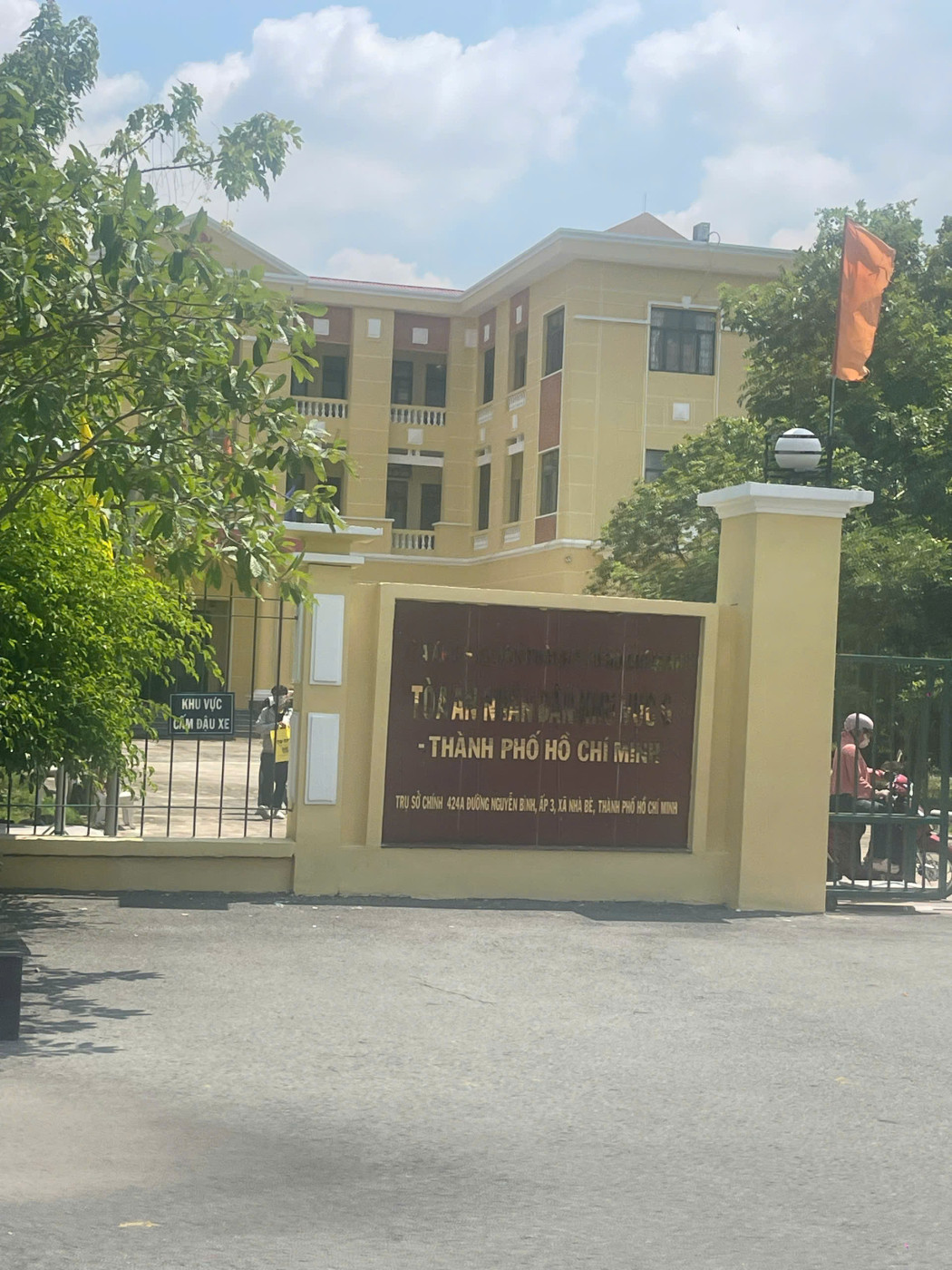
INSPECT NEW/OLD WARDS 2025 NATIONWIDE, COURT ADDRESS, PEOPLE'S COMMITTEE HEADQUARTERS