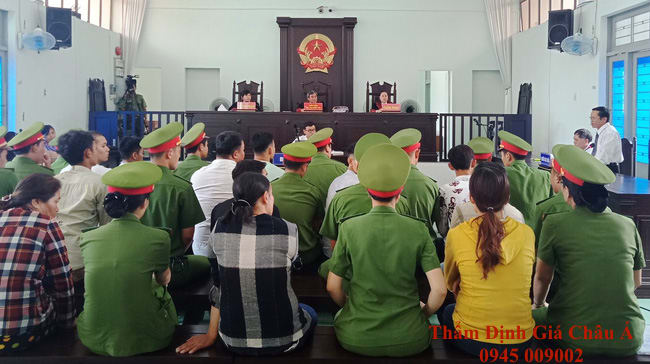
When was the People's Court of Region 6 of Ho Chi Minh City established?
The People's Court of Region 6 of Ho Chi Minh City is one of the regional People's Courts established under the policy of renovating the organization of the People's Court system to streamline the apparatus, improve the efficiency of judicial activities and be consistent with the new local government model.
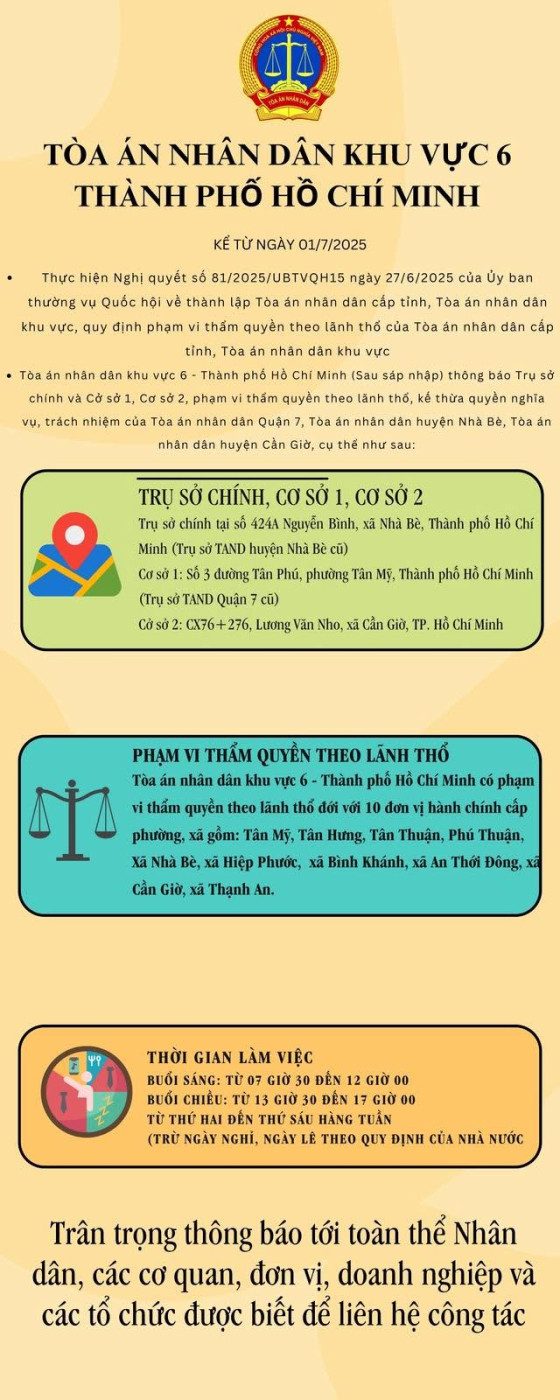
Pursuant to Resolution No. 81/2025/UBTVQH15 dated June 27, 2025 of the National Assembly Standing Committee on the establishment of Provincial People's Courts and Regional People's Courts and regulating the territorial scope of jurisdiction of Provincial People's Courts and Regional People's Courts, from July 1, 2025, the People's Court of Region 6 of Ho Chi Minh City officially comes into operation.
The People's Court of Region 6 was established on the basis of inheriting all rights, obligations, responsibilities, records, documents, personnel and professional activities of the units:
- People's Court District 7;
- Nha Be District People's Court;
- Can Gio District People's Court.
The establishment of the People's Court of Region 6 marks an important step in the judicial reform process in Ho Chi Minh City, helping to concentrate resources, improve trial quality, and create more favorable conditions for people and businesses to access justice.
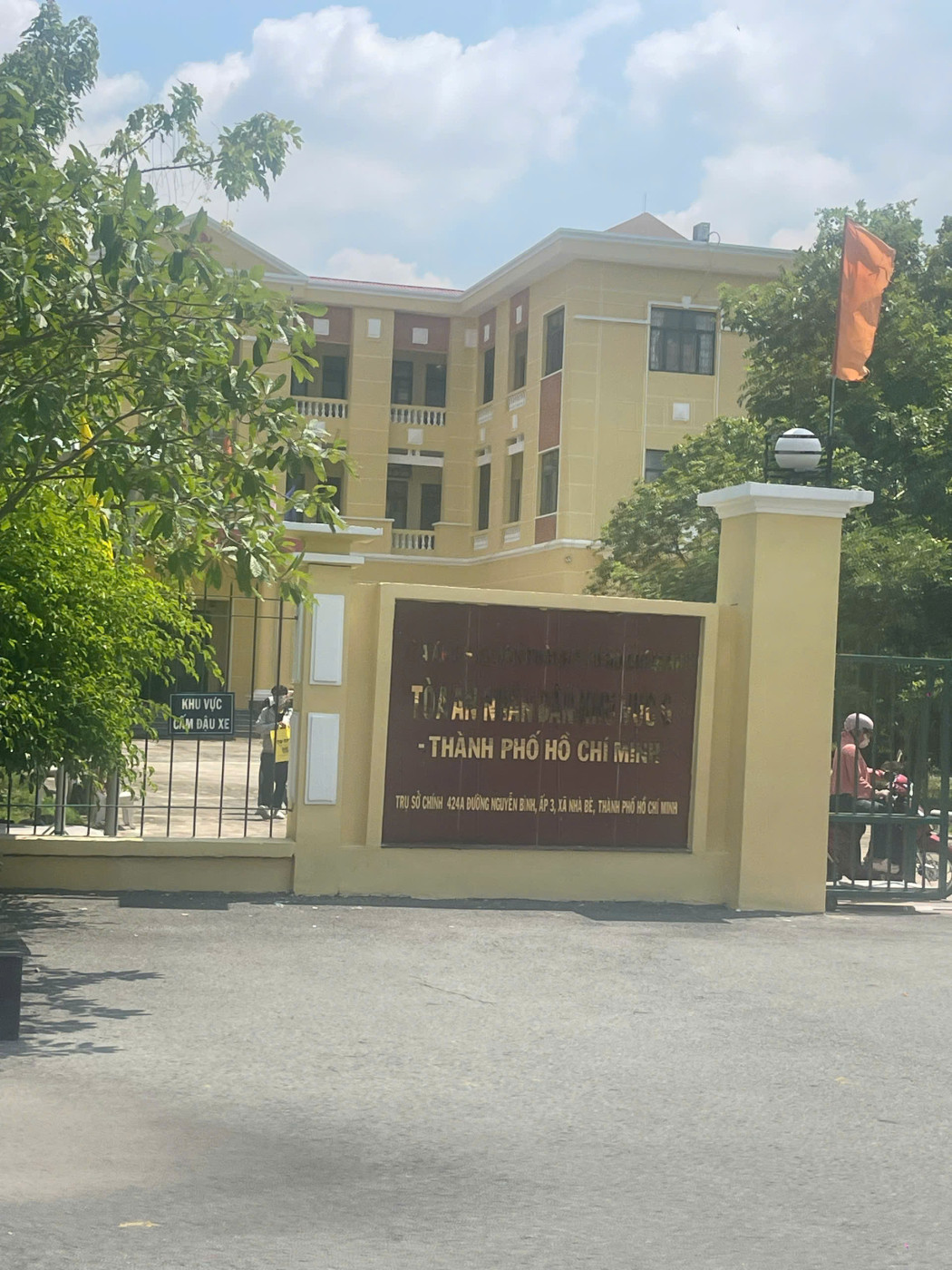
People's Court of Region 6
General introduction to the People's Court of Region 6 of Ho Chi Minh City
The People's Court of Region 6 is a State judicial agency under the People's Court system of Vietnam, exercising judicial power within the assigned territory.
The Court is responsible for resolving cases and matters according to the authority specified in the Civil Procedure Code, Criminal Procedure Code, Administrative Procedure Law and related legal documents.
After being established, the People's Court of Region 6 became the first instance trial agency for many types of disputes, requests and cases arising in the wards and communes of the southern region of Ho Chi Minh City.
This is an area with a high rate of urbanization, with many residential areas, new urban areas, industrial parks, seaports, domestic and foreign businesses, so the number of civil, commercial, labor and administrative disputes arising every year is relatively large.
Therefore, the People's Court of Region 6 plays a particularly important role in protecting the legitimate rights and interests of individuals, organizations and businesses; ensure socialist legality and contribute to maintaining social order and safety in the area.
Address of People's Court of Region 6, Ho Chi Minh City
To meet the work needs of people in a large area, the People's Court of Region 6 is arranged with a headquarters and two working facilities.
1. Head office
Address:
No. 424A Nguyen Binh, Nha Be Commune, Ho Chi Minh City
This is the old headquarters of the Nha Be District People's Court before the organizational restructuring.
The headquarters is currently the place to manage general operations of the People's Court of Region 6, receiving and handling most of the judicial administrative work, trial work and other professional activities.
location : https://maps.app.goo.gl/Jh5ucUJVoeXM2kKGA
2. Facility 1
Address:
No. 03 Tan Phu Street, Tan My Ward, Ho Chi Minh City
This is the former headquarters of the District 7 People's Court.
After the establishment of the People's Court of Region 6, this facility continues to be used to receive files, resolve cases and serve trial work as assigned by the unit.
location : https://maps.app.goo.gl/FTZc73nNDe2niUWo9
3. Facility 2
Address:
Luong Van Nho Street, Can Gio Commune, Ho Chi Minh City
This is the old headquarters of the People's Court of Can Gio district.
Facility 2 plays a supporting role in receiving documents, performing litigation activities and serving people in the Can Gio area, contributing to reducing travel time for litigants.
location : https://maps.app.goo.gl/ecysxKLbTG4wAyDC9
Territorial scope of jurisdiction of the People's Court of Region 6
According to the official announcement from July 1, 2025, the People's Court of Region 6 has territorial jurisdiction over 10 commune- and ward-level administrative units in Ho Chi Minh City.
Includes:
- Tan My Ward;
- Tan Hung Ward;
- Tan Thuan Ward;
- Phu Thuan Ward;
- Nha Be Commune;
- Hiep Phuoc Commune;
- Binh Khanh Commune;
- An Thoi Dong commune;
- Can Gio Commune;
- Thanh An commune.
All disputes, requests or cases arising under the jurisdiction of the Regional Courts in the administrative units mentioned above will be received and handled by the People's Court of Region 6 in accordance with the law.
Working hours of the People's Court of Region 6
People and businesses when coming to work, submit documents or participate in proceedings should note the Court's working hours as follows:
Morning
From 07:30 to 12:00.
Afternoon
From 13:30 to 17:00.
Working day
From Monday to Friday every week.
Closed on Saturdays, Sundays and holidays according to State regulations.
Litigants should proactively arrive early to carry out procedures for filing lawsuits, supplementing documents or making business contacts to avoid overload during peak hours.
Organizational structure of the People's Court of Region 6 of Ho Chi Minh City
Similar to other regional People's Courts throughout the country, the People's Court of Region 6 is organized according to the unified model of the People's Court system.
The basic organizational apparatus includes:
Chief Justice
The Chief Judge of the People's Court of Region 6 in Ho Chi Minh City is Mr. Huynh Thach Vu (former Chief Judge of the Cu Chi District People's Court)
The Chief Justice is the head of the People's Court of Region 6, responsible for leading, managing and operating all activities of the unit.
The Chief Justice has the following duties:
- Assign a Judge to resolve the case;
- Management of civil servants and public employees;
- Managing judicial activities;
- Implement judicial reform;
- Be responsible before the law and superiors for the Court's operations.
Deputy Chief Justices
Deputy Chief Justices assist the Chief Justice in management and administration and are directly in charge of assigned areas.
Chief Justice Huynh Thach Vu. Below the Chief Justice are 09 Deputy Chief Justices including:
Ms. Le Thi Diem Chau
Team of Judges
A judge is a person appointed by the State to carry out judicial activities.
This is the core force of the Court, directly researching files, conducting conciliation, adjudication and issuing judgments and decisions according to the law.
Inspector
Examiners assist Judges in the process of researching documents, verifying evidence and performing other procedural tasks.
Court Secretary
The Court Secretary's role is to support trial activities, record court minutes, manage records and carry out judicial administrative procedures.
Office Department
Including officers in charge of:
- Receiving applications;
- Clerical;
- Storage;
- Accountant;
- Information technology;
- Administrative administration.
People's Jury
People's jurors participate in trials with judges in cases according to the law, ensuring objectivity and democracy in trial activities.
What types of cases does the People's Court of Region 6 handle?
One of the issues that people and businesses are most interested in is the range of types of cases that the People's Court of Region 6 has jurisdiction to resolve.
According to current law, the People's Court of Region 6 performs the function of first instance trial for many different types of cases.
1. Resolve civil cases
This is the group of cases that accounts for the largest number of cases in the actual operations of the Court.
Common civil disputes include:
- Disputes over property loan contracts;
- Disputes over sales contracts;
- Deposit dispute;
- Disputes over land use rights;
- Land boundary disputes;
- Inheritance disputes;
- Common property disputes;
- Disputes over compensation for non-contractual damages;
- Disputes over property ownership;
- Disputes related to housing.
In addition, the Court also resolves civil requests such as:
- Recognition of divorce by mutual consent;
- Recognition of successful conciliation results;
- Declared missing;
- Declared dead;
- Request to determine property ownership;
- Request to declare the notarized document invalid.
2. Resolve marriage and family cases
In the civil case group, marriage and family cases account for a significant proportion in District 7, Nha Be and Can Gio.
The People's Court of Region 6 has the authority to resolve:
- Unilateral divorce;
- Divorce by mutual consent;
- Child custody dispute;
- Support dispute;
- Division of common property of husband and wife;
- Identifying parents and children;
- Change the person directly raising the child;
- Restriction of parental rights towards minor children;
- Other disputes arise from marital and family relationships.
During the resolution process, the Court always prioritizes conciliation procedures to help the parties reach an agreement and limit negative impacts on children and families.
3. Resolve business and commercial cases
District 7, Nha Be and Can Gio are areas with many domestic and foreign-invested enterprises concentrated. In particular, the Phu My Hung area, export processing zones, industrial parks and seaport systems create a vibrant business environment, leading to an increasing number of trade disputes.
The People's Court of Region 6 has the authority to resolve business and commercial disputes arising between individuals and organizations with business registration and all have profit purposes.
Some common types of disputes include:
- Disputes on goods purchase and sale contracts;
- Service contract disputes;
- Construction contract disputes;
- Shipping contract disputes;
- Disputes on agency contracts;
- Distribution contract disputes;
- Business cooperation contract disputes;
- Disputes between company members;
- Disputes related to the transfer of capital contributions;
- Disputes over shares in enterprises;
- Disputes over debt payment;
- Disputes in logistics and seaport activities;
- Disputes about commercial insurance;
- Disputes related to import and export activities.
For businesses operating in the area under the management of the People's Court of Region 6, correctly determining the Court's jurisdiction is an important factor to avoid the situation of documents being returned or prolonging the time to resolve the case.
4. Resolve labor cases
Labor relations are increasingly developing, leading to many disputes between employees and employers.
According to the law, the People's Court of Region 6 has the authority to resolve many types of labor disputes arising in the area.
Common labor disputes include:
Dispute over termination of labor contract
- Employees are fired illegally;
- Unilateral termination of labor contract;
- Terminating the contract without proper procedures;
- Request the employee to return to work.
Salary dispute
- Salary debt;
- Late salary payment;
- Salary not paid according to agreement;
- Bonus dispute;
- Allowance dispute.
Insurance disputes
- Social insurance;
- Health insurance;
- Unemployment insurance;
- Maternity regime;
- Labor accident regime.
Disputes over compensation for damages
- Compensation for breach of labor contract;
- Compensation for training costs;
- Material responsibilities of employees.
Courts play an important role in protecting the legal rights and interests of workers as well as ensuring a stable working environment for businesses.
5. Resolving administrative cases
In addition to civil and commercial disputes, the People's Court of Region 6 also has the authority to resolve administrative cases according to the provisions of the Law on Administrative Procedures.
This type of case arises when individuals and organizations believe that their legitimate rights and interests are violated by administrative decisions or administrative acts of State agencies or competent persons in State agencies.
Common administrative cases include:
- Complain about decisions to sanction administrative violations;
- Complaints about land recovery decisions;
- Complaints about site clearance compensation decisions;
- Complaints about enforcement decisions;
- Complaints related to issuance of land use rights certificates;
- Complaints in the construction sector;
- Complaints related to business registration;
- Complaints about administrative decisions in the tax field;
- Complaints about housing and land management.
This type of case is often complex because it involves state management agencies, requiring litigants to prepare complete records, documents and legal bases.
6. Resolve criminal cases
In addition to civil and administrative disputes, the People's Court of Region 6 also carries out the task of adjudicating criminal cases under its jurisdiction.
Common criminal cases in the area include:
- Crime of theft of property;
- Crime of fraudulent appropriation of property;
- Crime of intentionally causing injury;
- Gambling crime;
- Crime of organizing gambling;
- Crime of violating regulations on road traffic participation;
- Crime of illegal drug trafficking;
- Crime of disturbing public order;
- Crime of destruction of property;
- Other crimes as prescribed by the Penal Code.
Criminal trial activities contribute to protecting social order and safety, preventing crime and protecting human rights according to the provisions of the Constitution and law.
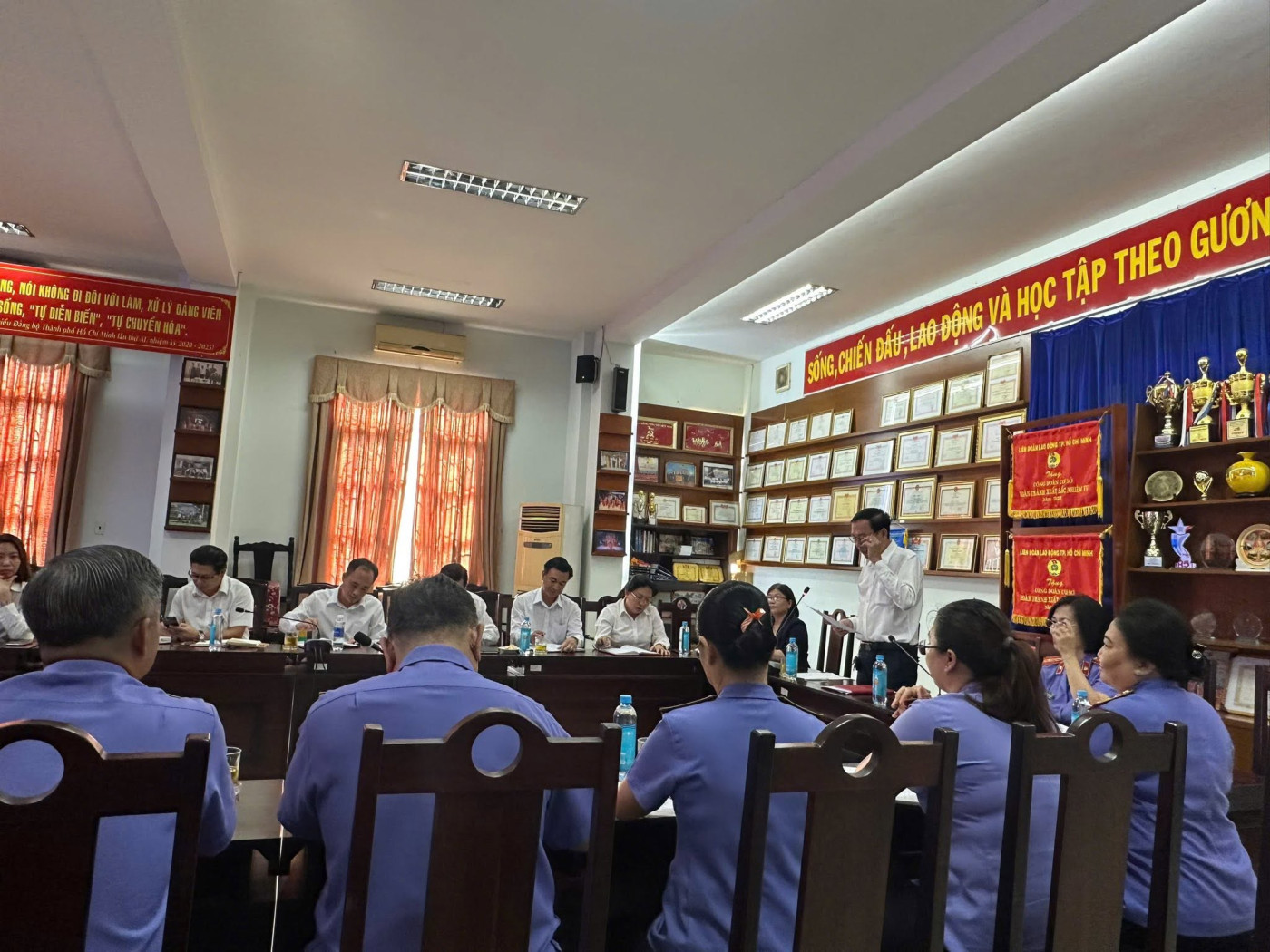
People's Court of Region 6
Instructions for filing a lawsuit at the People's Court of Region 6
People and businesses can file lawsuits in the forms permitted by law.
Submit directly to the Court
Litigants can go to the headquarters or workplace according to the Court's instructions to submit documents.
When submitting in person, you should bring:
- Citizen identification card or passport;
- Original copies of documents to be compared;
- The lawsuit file has been fully arranged.
Send documents by mail
The plaintiff can send the documents by certified mail to the People's Court of Region 6.
You should save the mailing receipt as a basis for determining when to submit your application.
Submit your application electronically
In case the electronic application receiving system is deployed, litigants can submit applications online according to the Court's instructions.
Lawsuit documents need to be prepared
Depending on the type of case, records may be different. However, it will typically include:
Petition
The petition must contain all of the following contents:
- Date, month, year of application;
- Name of the competent court;
- Information of the plaintiff;
- Information of the defendant;
- Contents of the case;
- Request to sue;
- List of documents and evidence attached.
Personal documents
- Citizen identification card;
- Passport;
- Certificate of residence (if required).
Documents proving the lawsuit request
For example:
- Contract;
- Working minutes;
- Certificate of land use rights;
- Business registration certificate;
- Message;
- E-mail;
- Payment receipt;
- Bill;
- Transaction documents.
The more complete the documents, the higher the ability to prove the claim before the Court.
Court fees and charges
One of the issues that many people are concerned about is the obligation to pay court fees and charges when participating in legal proceedings.
Normally, the plaintiff must pay a court fee advance according to the Court's notice.
The court fee depends on:
- Type of case;
- Disputed property value;
- Nature of the case.
For cases with quotas, court fees are determined according to the value of the disputed property.
For cases without a quota such as divorce or certain civil claims, a fixed court fee will apply according to current regulations.
Case resolution process at the People's Court of Region 6
A typical case will go through the following basic steps:
Step 1: File a lawsuit
The plaintiff submits documents to the Court.
Step 2: Review the petition
The court checks the validity of the file.
Step 3: Pay advance court fees
The plaintiff fulfilled his financial obligations according to the notice.
Step 4: Accept the case
The court issued a notice of acceptance.
Step 5: Collect evidence
The judge conducts verification and collects documents and evidence.
Step 6: Mediation
For many types of disputes, mediation is a mandatory procedure before bringing the case to trial.
Step 7: Trial
The court opens a trial and issues a judgment or decision.
The role of lawyers when participating in proceedings at the People's Court of Region 6
Although the law does not require a lawyer in every case, having a lawyer to assist brings many significant benefits.
Lawyers can:
- Consulting on dispute resolution plans;
- Drafting petitions;
- Collect and evaluate evidence;
- Authorized representative;
- Participate in mediation;
- Protecting rights at trial;
- Support for judgment enforcement after the judgment takes effect.
For land, business, investment or high-value disputes, using lawyer services from the beginning often helps significantly reduce legal risks.
Notes when working with the People's Court of Region 6
In order for the case resolution process to go smoothly, people and businesses should note:
- Correctly determine the Court's jurisdiction;
- Prepare complete documents before submitting;
- Keep copies of all documents;
- Participate fully in all working sessions according to the summons;
- Comply with procedural deadlines;
- Proactively provide evidence;
- Monitor the progress of case resolution;
- Consult an attorney when necessary.
Frequently asked questions about the People's Court of Region 6 of Ho Chi Minh City
Will the People's Court of Region 6 replace the People's Court of District 7?
Have. From July 1, 2025, the People's Court of Region 6 inherits the rights, obligations, responsibilities and operations of the People's Court of District 7.
Will the People's Court of Region 6 replace the Nha Be District People's Court?
Have. The headquarters of the People's Court of Region 6 is located at the former headquarters of the Nha Be District People's Court.
Will the People's Court of Region 6 resolve the case in Can Gio?
Have. The People's Court of Region 6 inherits the authority of the People's Court of Can Gio district and has a working base in this area.
Where do District 7 residents apply?
Depending on the Court's instructions for receiving documents from time to time, people can contact the headquarters or facility 1 for specific instructions.
Conclusion
The establishment of the People's Court of Region 6 of Ho Chi Minh City from July 1, 2025 is an important step in the process of innovating the organization of the judicial apparatus, improving the efficiency of judicial activities and better serving the people.
The People's Court of Region 6 currently inherits all functions and tasks of the People's Court of District 7, People's Court of Nha Be District and People's Court of Can Gio District; has jurisdiction over 10 commune and ward level administrative units in the southern region of Ho Chi Minh City.
People and businesses when arising civil disputes, marriage and family, commercial business, labor, administrative or other legal issues need to determine the correct jurisdiction of the Court to ensure the resolution of the case is carried out quickly and in accordance with the law.
If you need advice, support in preparing lawsuit documents, participating in proceedings or protecting legal rights and interests at the People's Court of Region 6 of Ho Chi Minh City, Asia Legal Group's team of lawyers is always ready to accompany and support customers throughout the case resolution process.
Asia Legal Group is a price appraisal unit managed by the Ministry of Finance. Especially among 100 price appraisal units in Vietnam, it is the only unit that builds a nationwide market land price list on the website. https://dinhgiaav.com/map/. Here everyone can check real estate prices nationwide within 1 minute, calculate land prices and construction prices extremely quickly and free of charge.
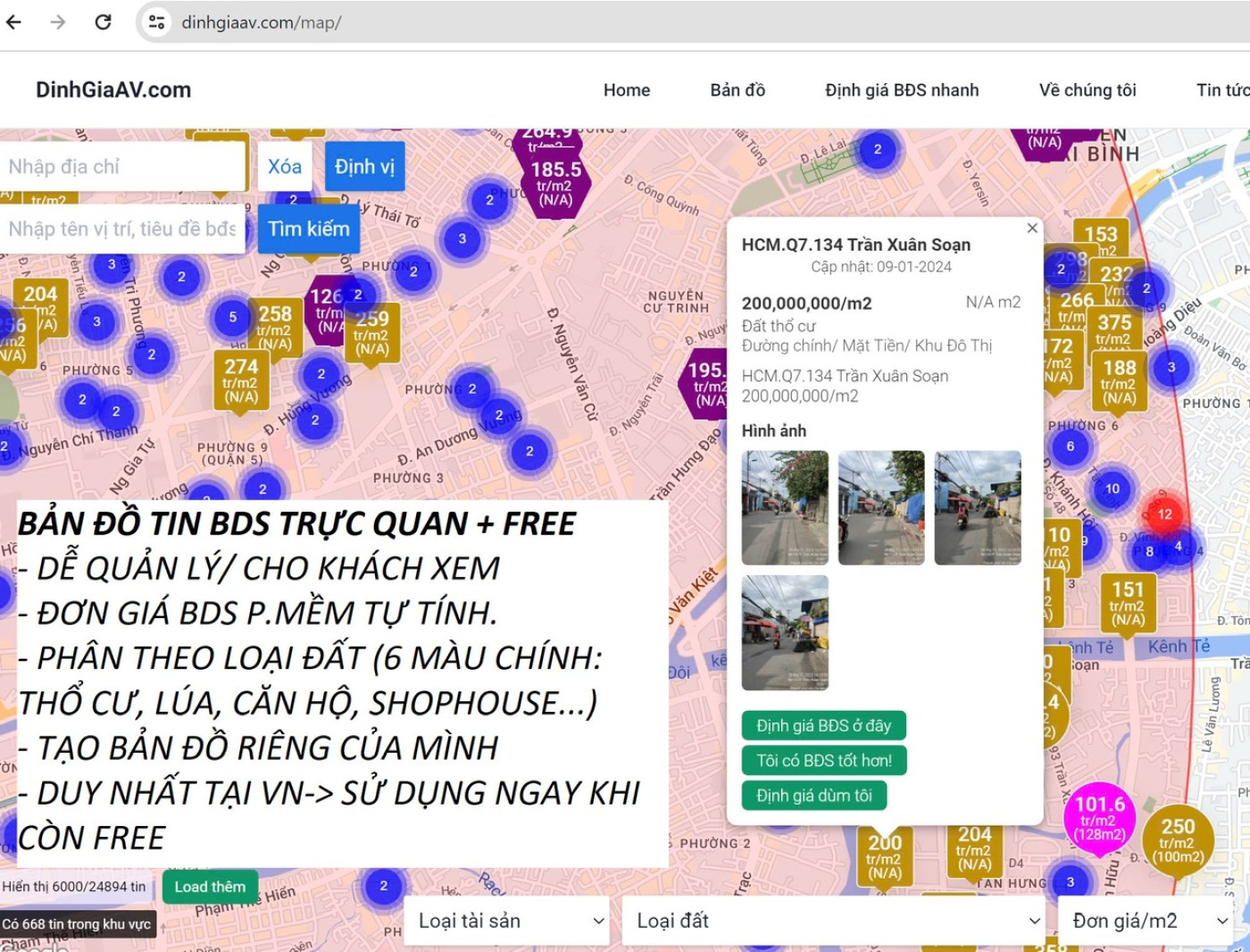
Source: Asia Legal Group
Phone number: 028 6674 3333 -0945 009002 (Deputy General Director)
INSPECT NEW/OLD WARDS 2025 NATIONWIDE, COURT ADDRESS, PEOPLE'S COMMITTEE HEADQUARTERS
PRELIMINARY LAND VALUATION BY ANY LOCATION NATIONWIDE IN 1 MINUTE