Villas, townhouses and terrace houses in Vietnam are valued differently from apartments, and the rules and market evidence behind them are not the same. If you are an Australian or New Zealand investor, a Singapore-based company, or an expat buying into a property, a villa and townhouse valuation in Vietnam gives you a market value supported by a signed valuation report. This guide explains the methods, documents and timing in plain terms.

How villas and townhouses differ from apartments in Vietnam
Vietnamese valuation standards group villas, garden houses, street-front houses and townhouses as individual houses. These are kept separate from multi-storey apartment buildings. As a result, comparable sales, building cost and land value are weighed differently, and one method does not suit every property.
- Villas are usually valued on land plus building, with design, location and finish driving much of the value.
- Street-front townhouses are assessed with frontage, road access and business use in mind.
- Townhouses in a project depend on the master plan, the project's completion stage and its legal status.
When a valuation is needed
Common reasons include bank or mortgage valuations, mortgagee sales and auction reserve prices, family law or estate valuations, and disputes where the court needs an independent value. Tax-related valuations, such as analysis for capital gains or stamp duty, should be scoped with your own accountant or lawyer before the valuer starts.
Valuation methods used in Vietnam
A valuer normally combines methods and checks the results against each other.
Sales comparison approach
This is the main approach where similar properties have recently sold. The valuer adjusts comparable sales for location, land area, legal status, condition and the date of sale.
Cost approach
Used for buildings with few comparable sales. The value of the land is added to the replacement cost of the building, less depreciation for its actual condition.
Income approach
Used where a house is leased. The valuer estimates net rental income and converts it to a present value, with assumptions on occupancy and running costs stated clearly in the report.
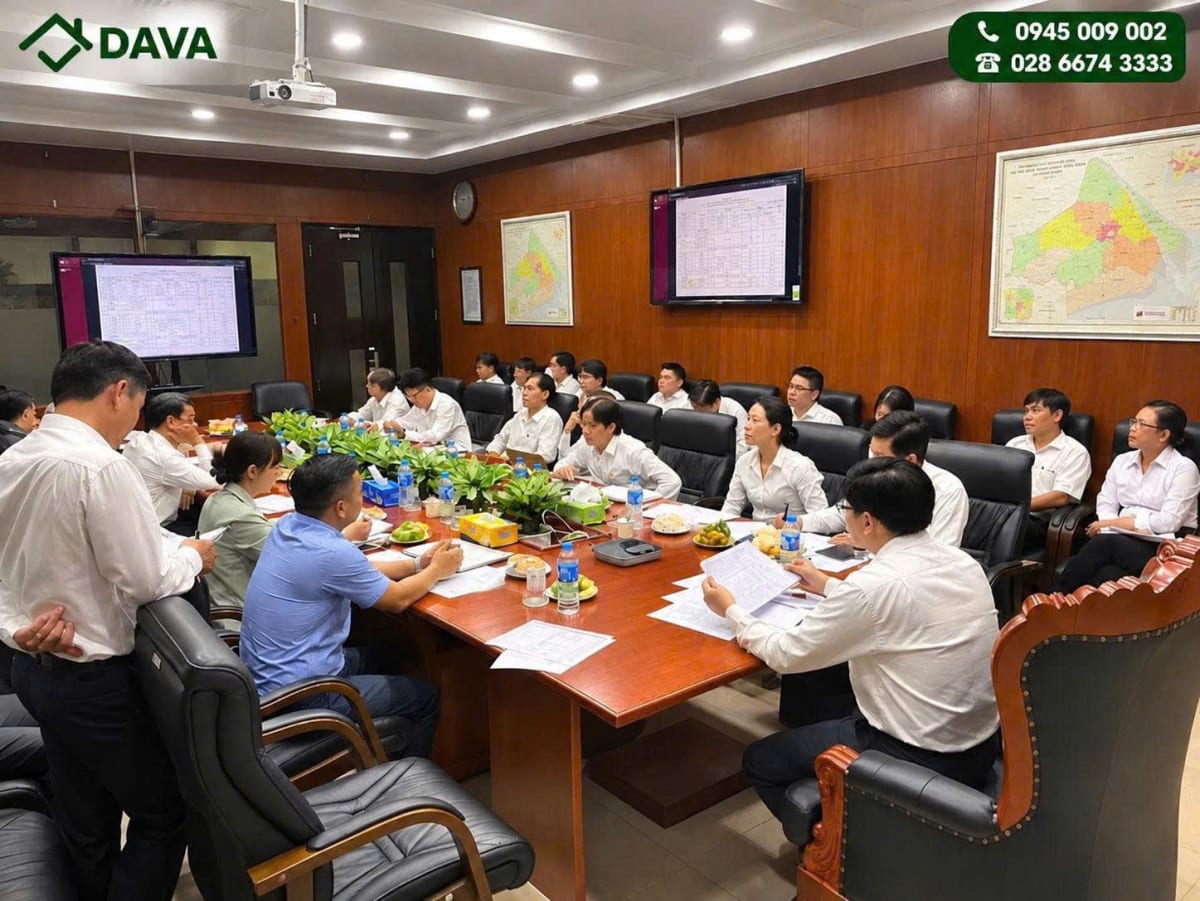
DAVA's valuation process
- Scope and purpose: confirm the property type, the purpose and who will rely on the report.
- Legal and planning checks: review land and house papers and planning information.
- Site inspection: record location, condition, structure, finish, utilities and surroundings.
- Market evidence: gather suitable comparable transactions.
- Analysis and reconciliation: apply the relevant methods and test whether the results are consistent.
- Report: a valuer signs the report, which states assumptions, limitations and the intended use.
Documents and timing
Typical documents include the land and house certificate, construction drawings or as-built plans, any lease or sale contract, planning information and the owner's details. Timing depends on how complete the papers are, the legal position and access to the site. Complete documents at the start usually make the process faster.
Fees
Vietnamese fees are quoted in dong and depend on the property value, the purpose and the documents. The indicative scale in the Vietnamese version of this article is for reference only. Approximate conversions to AUD, NZD or SGD are available on request, so please ask for a quote on your asset.
Vietnam vs Australia, New Zealand and Singapore
The table below compares the main points for property valuation. It is a general guide and not legal advice.
| Criteria | Vietnam | Australia | New Zealand | Singapore |
|---|---|---|---|---|
| Who signs the report | Valuer holding a Ministry of Finance valuer card, employed by a licensed valuation firm | Certified Practising Valuer (CPV) of the API, for many purposes | Registered valuer under the Valuers Act 1948 | Licensed appraiser issued by IRAS |
| Regulator or licensing body | Ministry of Finance | API; some states such as Queensland and Western Australia require registration | Valuers Registration Board, LINZ | IRAS, under the Appraisers Act 1906, renewed annually |
| Standards | Vietnamese valuation standards | IVS and API standards | PINZ and NZIV standards | SISV (property) and IVAS (business) |
| Typical fee reference | Indicative scale in VND; request a quote | Varies; request a quote | From about NZ$800 + GST (2023 data) | Roughly S$500 to S$700 |
| Key legal difference | Land belongs to the people and is managed by the State; foreign buyers hold ownership of houses only on conditions | Freehold and leasehold titles, with state rules varying by state | Freehold titles are the common form | Freehold and 99-year leasehold; HDB and condominium rules; ABSD applies to foreign buyers of residential property |
Sources for the fee references are listed at the end of this article.
How DAVA supports foreign companies and expats in Vietnam
DAVA prepares valuation reports for banks, courts, businesses and individuals, and we visit the property in person. Our team can explain Vietnamese processes to foreign owners, including what a report can and cannot be used for. For Australian clients, our partner Qualified AU Pty Ltd can be reached on WhatsApp at +61 451 710 342, and our team is on email at voan.sgg@gmail.com.
Contact DAVA for a quote: Hotline/Zalo 0945 009 002 · 0906 915 002 · 028 6674 3333
Email: voan.sgg@gmail.com · Zalo OA: https://zalo.me/4259407728989141071
Our team can work with you in English; documents can be prepared bilingually.