If you and your spouse cannot agree on the value of shared property during a divorce, property valuation for divorce in Vietnam gives both sides a market-based figure to negotiate with, or to put before a court. This guide explains when a valuation is needed, how the process works, what documents to prepare, typical timing and indicative fees, and how DAVA supports foreign families and expats.

What Is Property Valuation in a Divorce?
A valuation report is a written opinion of the market value of an asset at a stated date, for a stated purpose, prepared by a licensed valuer. In a divorce, the purpose is to support the division of shared assets. It serves a similar purpose to a family law valuation in Australia or a relationship property valuation in New Zealand, although the rules and who may sign the report differ by country.
When Is a Valuation Needed?
- Spouses disagree on the value of a house, land or vehicle being divided.
- A property is in one name but its value or contribution is disputed.
- Shared assets include a business, shares or machinery that need pricing.
- A court asks for a valuation to resolve an asset dispute.
- One party needs a figure to buy out the other's share or to support a loan.
Legal Principles in Vietnam
In general, spouses agree between themselves how to divide shared property on divorce. Where they cannot agree on value or division, either party can ask a court to decide. The court can ask a valuation organisation to value the asset, and the usual reference point is market value at the valuation date.
Rules change over time, so check the current position with the court or a Vietnamese lawyer before filing. Foreign owners should also note that foreigners can hold property in Vietnam only under limited conditions, which can affect how a settlement is structured.
Valuation Options: Agreed, Independent or Court-Ordered
- An agreed figure between the spouses, suitable when assets are simple and both agree.
- An independent valuation report to support negotiation.
- A court-ordered valuation when the parties do not agree.
An independent report gives both sides an objective basis and reduces argument over the number. For property, a valuer usually considers location, land area, legal status, physical condition and recent market transactions.
How DAVA Carries Out a Valuation
- Intake and advice on the purpose of the valuation and the assets to be covered.
- Review of legal and physical documents.
- On-site inspection, photographs and measurements where needed.
- Market research and analysis using the appropriate approach.
- Issue of the valuation report and discussion of the result with you.
Typical Timing
Timing depends on the number of assets, how complete the documents are and whether an inspection is needed. A simple house or land parcel with full documents is usually much quicker than a large portfolio or a disputed asset. If the matter is already before a court, timing also depends on the court's schedule.
Documents to Prepare
- Legal documents for the asset, such as the land use right certificate or house ownership certificate, or equivalent papers.
- Proof of origin, such as purchase contracts, gift documents, inheritance papers or prior division agreements.
- Building permit, as-built drawings or a site plan for residential buildings.
- Information on location, utilities and recent comparable sales.
- A court document or written agreement stating the purpose of the valuation.
- Identification documents for the requesting party and other parties where required.

Indicative Fees
Indicative fees are for reference only. Actual fees depend on documents, location and the number of assets. Please contact us for the best quote.
Our fees are quoted in Vietnamese dong (VND). We can provide an indicative quote in AUD, NZD or SGD on request, since exchange rates change daily.
| Asset value (VND) | Bank loan | Preliminary quote | Court, dispute | Criminal, special cases |
|---|---|---|---|---|
| 500 million | 3.0 | 2.1 | 10.4 | 20.0 |
| 1 billion | 4.0 | 2.8 | 10.4 | 25.0 |
| 2 billion | 5.0 | 3.5 | 13.0 | 30.0 |
| 3 billion | 5.9 | 4.1 | 19.5 | 35.0 |
| 5 billion | 7.6 | 5.3 | 19.5 | 42.0 |
| 10 billion | 12.4 | 8.7 | 26.0 | 50.0 |
| 20 billion | 22.9 | 16.0 | 39.0 | 89.0 |
| 50 billion | 44.7 | 31.3 | 63.7 | 190.0 |
| 100 billion | 59.5 | 41.7 | 115.7 | 310.0 |
| Above 100 billion | By agreement | By agreement | By agreement | By agreement |
Figures in millions of VND.
Need an indicative quote? Contact DAVA:
- Hotline/Zalo: 0945 009 002 · 0906 915 002
- Office: 028 6674 3333
- Email: voan.sgg@gmail.com
- Zalo OA: zalo.me/4259407728989141071
- WhatsApp for Australian clients (Qualified AU Pty Ltd): +61 451 710 342
Practical Scenarios
Property in One Spouse's Name
A property held in one name can still be shared property, depending on when and how it was acquired. A valuation sets the figure needed to calculate the division. Ownership itself is decided by agreement or by the court.
Assets Acquired During the Marriage
Current value can differ a lot from the purchase price. A current market-based report gives both parties a figure they can check against.
Property Under Mortgage
If the property is mortgaged, the obligation to the bank needs to be clear before any division. A valuation for lending purposes differs from one for dividing assets, so state the purpose when you ask for the report.
Family Business Interests
A holding in a family company requires a business valuation, which is more complex than a property valuation. Discuss the financial records early.
Where DAVA Carries Out Valuations
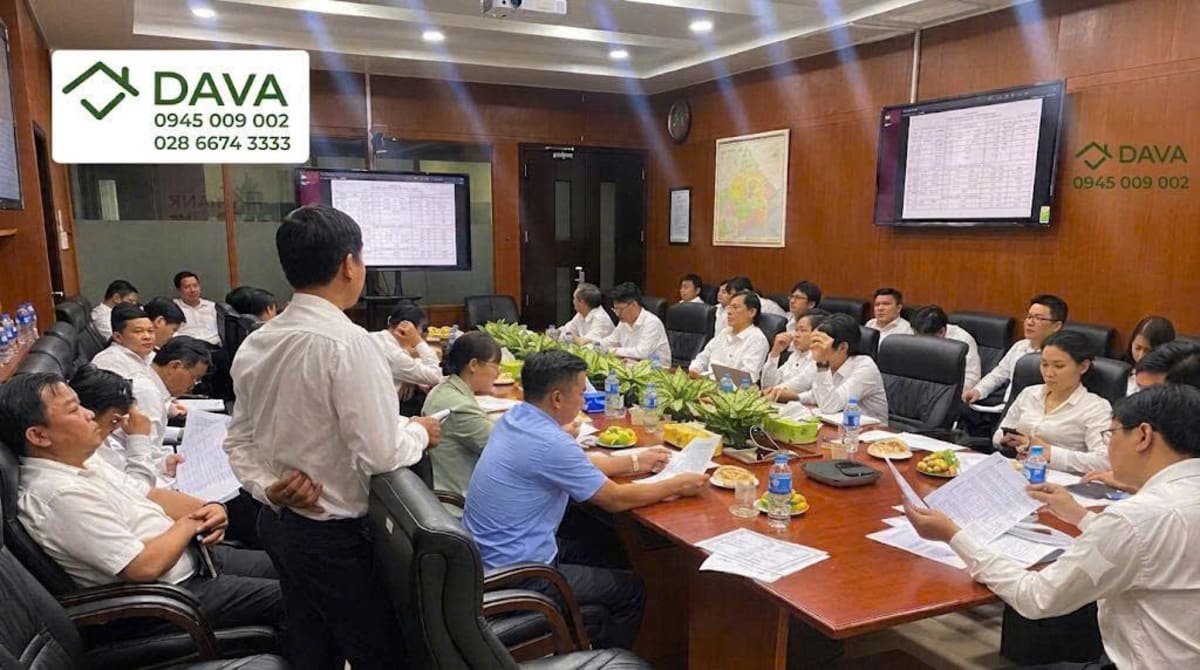
DAVA has offices in Ho Chi Minh City, Hanoi and Da Nang. Our valuers can inspect assets on site to check condition, location and other factors that affect value. If your asset is outside these three cities, please contact us to discuss inspection options.
Vietnam vs Australia, New Zealand and Singapore
The table below summarises how valuation works in each market. Rules are general and change over time.
| Criteria | Vietnam | Australia | New Zealand | Singapore |
|---|---|---|---|---|
| Who signs the report | Licensed valuer of a licensed valuation firm | Certified Practising Valuer (CPV) for many reports; some states require valuer registration | Registered valuer under the Valuers Act 1948 | Licensed appraiser issued by IRAS |
| Licensing body | Ministry of Finance (valuation firms) | Australian Property Institute (API) | Valuers Registration Board, LINZ | IRAS, renewed annually |
| Standards | Vietnamese valuation standards | IVS and API standards | PINZ / NZIV standards | SISV (property) and IVAS (business) |
| Indicative fee | See table above (VND) | Varies; request a quote | From about NZ$800 + GST (2023 data) | About S$500–700 |
| Key legal difference | Foreigners hold property rights only under limited conditions | Settlement rules and valuation requirements vary by state | Settlement rules differ from Vietnam | Additional buyer's stamp duty applies to foreign buyers |
How DAVA Supports Foreign Companies and Expats in Vietnam
Many of our clients are foreign companies, expatriates and overseas Vietnamese with property or subsidiaries in Vietnam. We explain each step in plain English, coordinate with your lawyers and accountants, and prepare documents bilingually where needed. Our fees are transparent, and we will confirm the scope before work begins.
Contact DAVA:
- Hotline/Zalo: 0945 009 002 · 0906 915 002
- Office: 028 6674 3333
- Email: voan.sgg@gmail.com
- Zalo OA: zalo.me/4259407728989141071
- WhatsApp for Australian clients (Qualified AU Pty Ltd): +61 451 710 342
Sources
- Smith Partners: New Zealand valuation fee information (2023 data)
- HLAS: how to get your home appraised in Singapore
Our team can work with you in English; documents can be prepared bilingually.