
A construction final account audit in Vietnam is an indispensable financial and statutory review process for foreign property developers, international contractors, and multinational corporations investing in industrial factories, commercial centres, and infrastructure projects across the country. Once a construction project reaches practical completion and is handed over for operational use, an independent final account audit establishes the definitive, legally compliant capital expenditure figure, ensuring full contract reconciliation and tax compliance under Vietnamese law.
At Asia Auditing and Valuation Co., Ltd (AAVC – operating under the DAVA brand), we deliver rigorous, bilingual construction final account audit in Vietnam services. Our audit opinions and comprehensive completion reports serve as authoritative evidence for board approval, asset capitalisation, contractor settlement, and statutory scrutiny by Vietnamese tax authorities, external financiers, and joint-venture partners.

Understanding Construction Final Account Audit in Vietnam
In Vietnamese investment and construction governance, a project completion audit (often termed a capital expenditure audit or final account audit) involves a systematic independent examination of all incurred project expenditures. This covers design fees, civil works, mechanical and electrical (M&E) installations, imported plant machinery, project management costs, and regulatory compliance from initial permitting through to final handover.
For international investors, this process mirrors the final account settlement and cost audit typically supervised by a chartered Quantity Surveyor (QS) in Australia, New Zealand, or Singapore. However, under Vietnamese jurisdiction, the final audited statement must strictly adhere to the Vietnamese Standards on Auditing (VSA) and Vietnamese Accounting Standards (VAS) to be recognised as a valid legal basis for capitalising assets onto the balance sheet and claiming input value-added tax (VAT) refunds.
Key Components of a Construction Final Account Audit in Vietnam
A rigorous construction final account audit encompasses detailed investigative procedures across six primary project dimensions:
- Statutory and Permitting Review: Verifying investment licences, master planning approvals (1/500), construction permits, fire safety certifications (PCCC), and environmental impact assessment approvals.
- Contract and Procurement Compliance: Reviewing tender documentation, contract terms (FIDIC or bespoke Vietnamese construction contracts), payment milestones, advance guarantees, and performance bonds.
- Civil Works and M&E Verification: Detailed physical cross-checking between as-built drawings (bản vẽ hoàn công), interim payment certificates (IPCs), site inspection logs, and actual site conditions.
- Plant, Machinery and Equipment Audit: Verifying import customs declarations, commercial invoices, bills of lading, certificates of origin (CO), certificates of quality (CQ), and commissioning testing protocols.
- Variation and Claim Substantiation: Scrutinising contractor variation requests, extension of time (EOT) claims, price adjustment formulae, and liquidated damages for project delays.
- Asset Breakdown for Group Consolidation: Allocating total capitalised investment into discrete asset classes (buildings, land improvements, machinery, software) to facilitate seamless consolidation into overseas parent company financial reporting packs.

Vietnam vs Australia, New Zealand and Singapore
For foreign directors, chief financial officers, and commercial managers from Australia, New Zealand, and Singapore managing projects in Vietnam, understanding the comparative framework of construction cost verification and final account settlement is essential. The table below outlines the core operational differences:
| Criteria | Vietnam | Australia | New Zealand | Singapore |
|---|---|---|---|---|
| Governing Body & Practitioner | Statutory Audit Firm & Certified Auditors registered with Ministry of Finance (MOF) | Registered Company Auditor (ASIC) / Certified Quantity Surveyor (AIQS) | Licensed Auditor (FMA/NZICA) / Registered Quantity Surveyor (NZIQS) | Public Accountant (ACRA) / Registered Quantity Surveyor (SISV) |
| Applicable Standards | Vietnamese Standards on Auditing (VSA) & VAS (progressing towards VFRS/IFRS) | Australian Auditing Standards (ASA) & AASB (aligned with IFRS) | International Standards on Auditing (NZ) & NZ IFRS | Singapore Standards on Auditing (SSA) & SFRS(I) |
| As-Built Verification | Mandatory tripartite as-built drawings certified by Contractor, Supervisor & Employer | As-built drawings verified by project superintendent & independent QS | Practical completion certificate & producer statements (PS3/PS4) | Architect/PE certification & Temporary Occupation Permit (TOP) |
| Group Reporting Pack Alignment | Reconciliation required from VAS project accounts to parent entity GAAP/IFRS | Direct integration into AASB consolidation schedules | Direct integration into NZ IFRS reporting packs | Direct integration into SFRS(I) reporting templates |
| Indicative Turnaround & Cost | Turnaround: 15–45 days. Reference fees: ~VND 51.8M (AUD ~2,880 / NZD ~3,580 / SGD ~2,580) for VND 5B project; ~VND 243M (AUD ~13,500 / NZD ~16,800 / SGD ~12,100) for VND 50B project (approximate, based on rates around 06 November 2026) | Turnaround: 3–6 weeks. Fees: varies based on AIQS scale and project complexity; request bespoke quote | Turnaround: 3–6 weeks. Commercial QS and audit rates from approx. NZ$180–$250/hour + GST | Turnaround: 2–5 weeks. Final account fees typically 0.5%–1.5% of construction contract sum |
Note: Exchange rates are approximate, based on prevailing mid-market rates around 06 November 2026 (1 AUD ≈ 18,000 VND; 1 NZD ≈ 14,450 VND; 1 SGD ≈ 20,100 VND). All figures are rounded for comparative clarity.
The DAVA Construction Audit Methodology
DAVA employs an integrated auditing framework combining certified financial auditors and seasoned quantity surveyors to ensure thorough technical and financial scrutiny:
- Engagement and Risk Assessment: Establishing project materiality thresholds, reviewing contractual governance, and identifying high-risk variation packages.
- Documentary Evidential Review: Cross-examining approved master budgets against purchase orders, subcontracts, variation orders, and banking payment records.
- On-Site Physical Inspection: Conducting physical site visits across Vietnam to verify the physical existence and completed quantities of structural, architectural, and M&E works.
- Bilateral Query Clarification: Formulating an exhaustive query sheet for the project management unit and main contractor to rectify unsupported documentation.
- Draft Final Account Audit Report: Presenting provisional findings, proposed cost disallowances, and balance reconciliations to the client board.
- Final Certified Deliverable: Issuing the final bilingual audit report complete with auditor's legal opinion, balance reconciliation exhibits, and internal control management letters.
Practical Strategies for Overseas Contractors and Developers
To avoid lengthy disputes at the final account stage, multinational developers operating in Vietnam should implement clear protocols early in the project lifecycle:
- Maintain Contemporaneous Site Records: Ensure that all design variations, unforeseen site obstructions, and inclement weather delays are formally recorded in daily site diaries signed by the supervising engineer.
- Standardise Billing Milestones: Structure progress claims strictly against tangible deliverables rather than estimated percentages of completion, cross-referenced with laboratory test results.
- Manage Currency and Import Tax Exposures: For imported specialised plant, reconcile commercial customs clearance values promptly to avoid transfer pricing scrutiny.
- Pre-Audit Interim Accounts: Engaging an independent auditor during intermediate construction milestones substantially diminishes year-end close pressures.
Common Pitfalls in Vietnamese Construction Final Accounts
International developers frequently encounter challenges when concluding capital investment projects in Vietnam. Our audits routinely safeguard clients against the following vulnerabilities:
- Unsubstantiated Material Price Adjustments: Contractors applying formulaic inflation increases without providing official provincial construction price index announcements or genuine supplier tax invoices.
- Discrepancies in Steel and Concrete Ratios: Inconsistencies between structural calculation sheets, cutting lists (bar bending schedules), and concrete delivery slips.
- Lacking Import Verification Documentation: High-value electrical switchgear or chiller systems installed without valid customs release declarations, posing severe tax deduction disallowances.
- Delayed Fire Protection (PCCC) Certification: Capital expenditure cannot be formally finalised or amortised for tax purposes until local police firefighting authorities issue the official commissioning approval.
How DAVA Supports Foreign Companies and Expats in Vietnam
DAVA (Asia Auditing and Valuation Co., Ltd – AAVC) is a licensed multidisciplinary professional services firm recognised by the Ministry of Finance. For over 15 years, our senior partners have delivered premier valuation, financial audit, and construction capital expenditure reviews to state authorities, commercial courts, international banking institutions, and overseas investment funds.
Whether you are constructing a state-of-the-art manufacturing facility in Binh Duong, an automated logistics warehouse in Bac Ninh, or a high-end resort development in Da Nang, our bilingual teams provide end-to-end technical assurance. In addition, our strategic proptech affiliate Datngop.com provides rapid AI-driven market intelligence, while our rapid property valuation platform assists institutional investors with ongoing portfolio surveillance across Vietnam.
Our team can work with you in English; documents can be prepared bilingually.
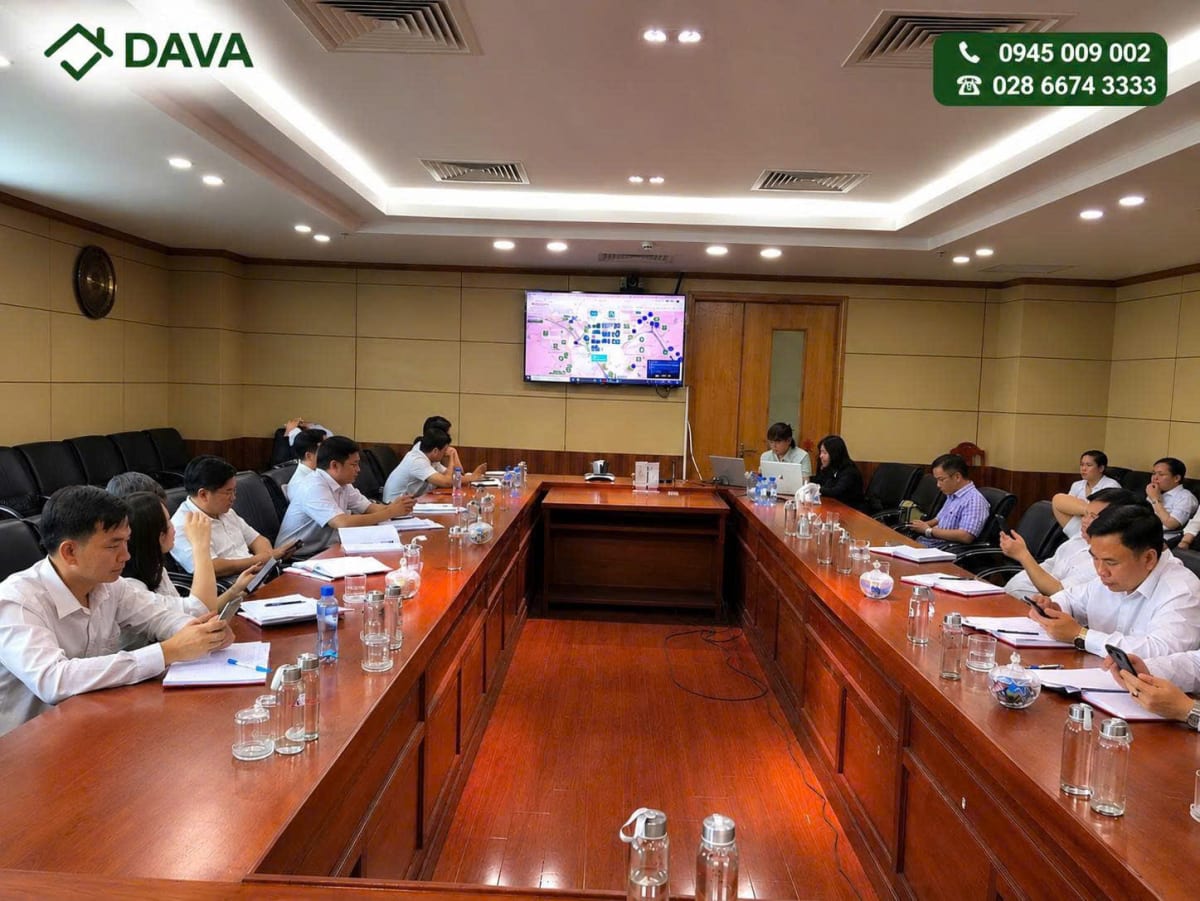
ASIA AUDITING AND VALUATION CO., LTD (AAVC) – DAVA BRAND
To arrange a preliminary consultation for your construction final account audit or project completion review in Vietnam, please contact our international engagement director:
WhatsApp (Australia): +61 451 710 342 (Qualified AU Pty Ltd, for Australian clients)
Email: voan.sgg@gmail.com
Vietnam Hotline: (+84) 945 009 002 – (+84) 28 6674 3333
Head Office: Ho Chi Minh City · Hanoi · Da Nang
Sources
- Australian Institute of Quantity Surveyors (AIQS): https://www.aiqs.com.au/
- New Zealand Institute of Quantity Surveyors (NZIQS): https://www.nziqs.co.nz/
- Singapore Institute of Surveyors and Valuers (SISV): https://www.sisv.org.sg/
- Australian Securities and Investments Commission (ASIC): https://asic.gov.au/
- Accounting and Corporate Regulatory Authority Singapore (ACRA): https://www.acra.gov.sg/
Governance and Dispute Avoidance for Foreign Contractors
Managing capital development projects in emerging markets like Vietnam requires proactive alignment with local administrative processes. In our multi-year practice assisting international engineering and construction consortia, commercial disputes over final accounts frequently arise from mismatched expectations rather than bad faith. For example, foreign project managers operating under standard international FIDIC conditions may presume that an Engineer's determination carries immediate binding fiscal authority. In Vietnam, however, statutory capitalisation requires statutory auditor certification and alignment with approved investment master budgets.
To establish institutional certainty, foreign joint-venture entities should structure bilingual variation approval logs from day one. Engaging an accredited statutory auditor like DAVA during mid-term construction milestones enables foreign project directors to detect uncertified variations early, avoid prolonged dispute arbitrations, and ensure seamless capitalisation into group balance sheets.